

Transportation in Crete
Guidance for your planning
What this page is about
What is the best way to get around Crete?
This question comes up time and time again, especially if you want to see more than just your holiday resort. There are many different modes of transport in Crete, but not all of them are suitable for every situation. What looks simple on the map can be quite different in practice.
This page is designed to help you get a realistic overview of the transport and mobility options in Crete. What works, what is more difficult and where are the limitations?

A few thoughts from practice
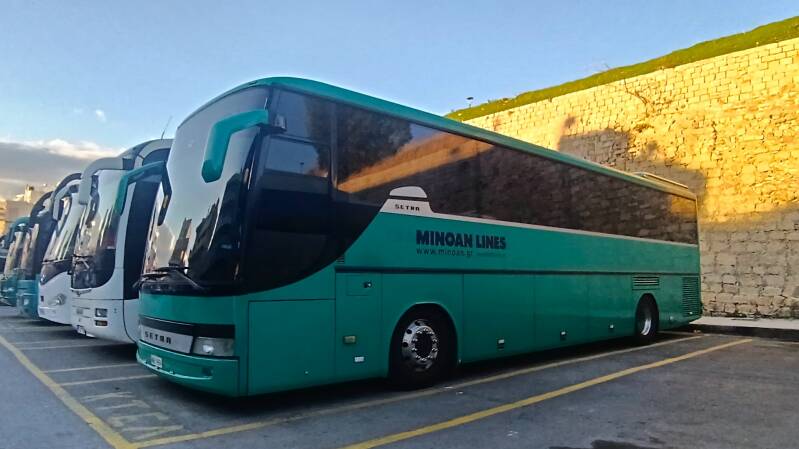
Travelling around Crete is almost like a little adventure, and not just because of the goats that occasionally stand in the middle of the road. Whether you're travelling across the island on the big green KTEL long-distance bus, bumping through the city on the Astiko (local bus), grabbing a taxi, chugging leisurely through the countryside on the tourist train or exploring the city on the brightly coloured hop-on hop-off bus, every mode of transport has its own unique charm. Sometimes loud, sometimes leisurely, sometimes surprisingly cheap, sometimes... well, let's say: typically Greek in terms of organisation. If you really want to get to know Crete, it's best to try them all, including the inevitable discussion with the bus driver about whether the ticket is really valid to the beach.
An overview of the various modes of transport
There are several types of transport available in Crete, each with its own strengths and limitations. Which one makes sense depends largely on your plans.
The green KTEL buses (ΚΤΕΛ)
They are the backbone of public transport in Crete.
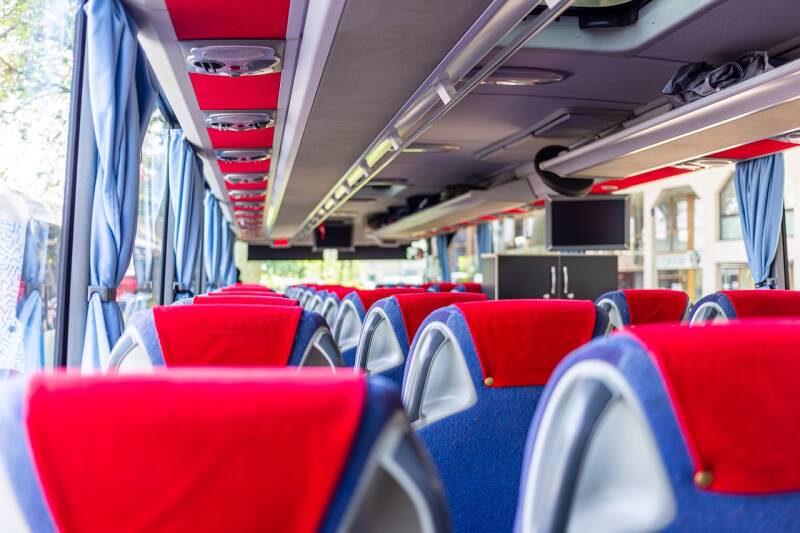
They connect the major cities, villages and beaches. Mostly punctual, sometimes surprisingly fast, and almost always with a driver who knows every bend in the road personally. If you don't have a car but still want to see a lot, this is the right choice. The seats are comfortable, the tickets are cheap, and the views along the way are magnificent. There's just one thing you should know: if the bus driver stops briefly to get a coffee, it's not because of traffic, it's Greek efficiency.
The KTEL bus is the long-distance bus service that takes you all over Crete.
Typical:
- Regular connections between cities
- Relatively cheap fares
- Stops mainly in well-connected locations
Restrictions:
- Rarely direct connections to hiking starting points, beaches or small villages
- Timetables not always intuitive to plan
- Waiting times possible
In short: Buses can be good for basic connections, but they are no substitute for a car if you want to be flexible when travelling.
Timetables:
Eastern Crete: https://www.ktelherlas.gr/en
Western Crete: www.e-ktel.com

Astiko (Αστικό), the regular bus service for short distances
In cities such as Heraklion, Chania and Rethymno, Astiko buses provide local transport. They are mostly blue and white, run quite reliably and are the cheapest way to get around town without having to search for a parking space or get stressed out. The drivers often know their passengers by name, and if you're not sure where to get off, just ask – someone is sure to help you.
The Astiko is the city bus, practical, inexpensive and with a lot of everyday flair.
Taxi, fast, comfortable, with stories included
Taxis are everywhere in Crete, and the drivers are often like tour guides. Some will tell you stories about gods, politicians or the best tavern, while others will simply drive you to your destination quickly and without saying a word. Of course, they are more expensive than the bus, but for spontaneous trips to the surrounding area or the journey home after one too many glasses of raki, a taxi is worth its weight in gold.
Taxis are comfortable, direct and often more entertaining than any city tour.

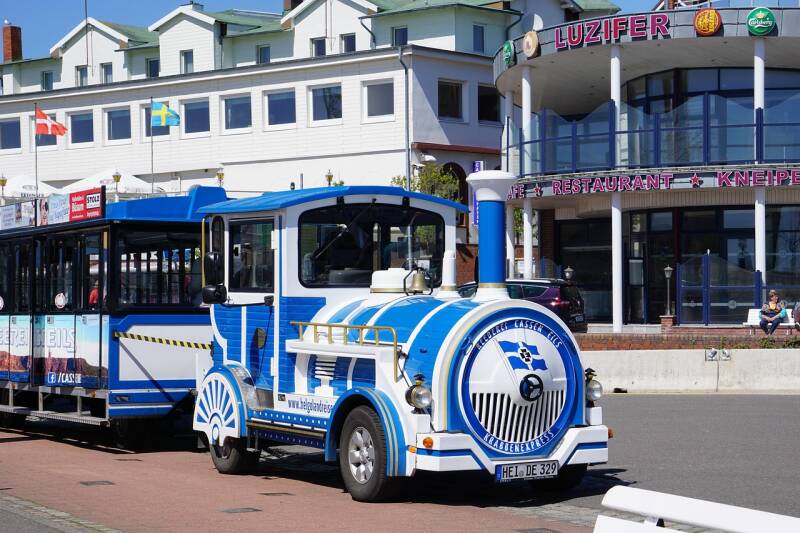
Tourist train, leisurely sightseeing
These little tourist trains can be seen in many holiday resorts. Colourful, cheerful and with a loud ‘Toot’. They chug leisurely through towns and the surrounding countryside, sometimes past beaches, sometimes right through the middle of villages. Ideal if you are travelling with children or simply fancy a stress-free little tour.
The tourist train is a charming way to discover sights at a snail's pace.
Hop-on hop-off bus, the classic choice for explorers
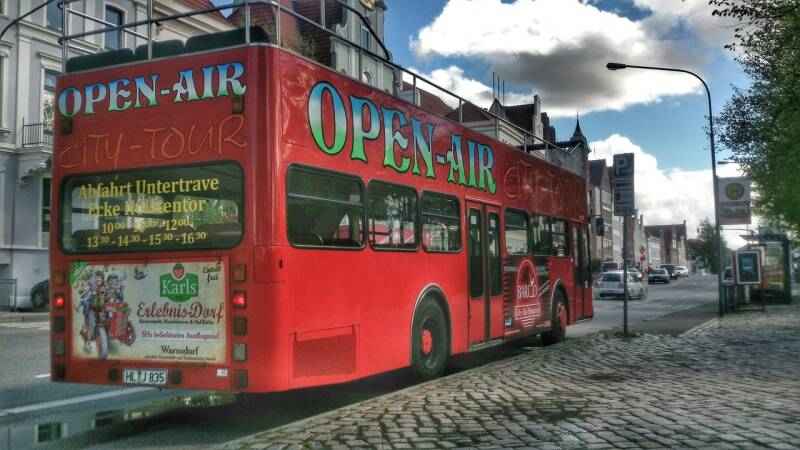
The large open-top double-decker buses are familiar sights in every capital city, and yes, Crete has them too! In cities such as Heraklion, Rethymnon and Chania, you can simply hop on and off wherever you like. Put on your headphones, feel the sun on your face, and off you go to see the sights, without having to search for a parking space or navigate the chaos of city maps.
The hop-on hop-off bus is perfect for anyone who likes comfortable and flexible sightseeing.

Bicycle, scooter and e-scooter
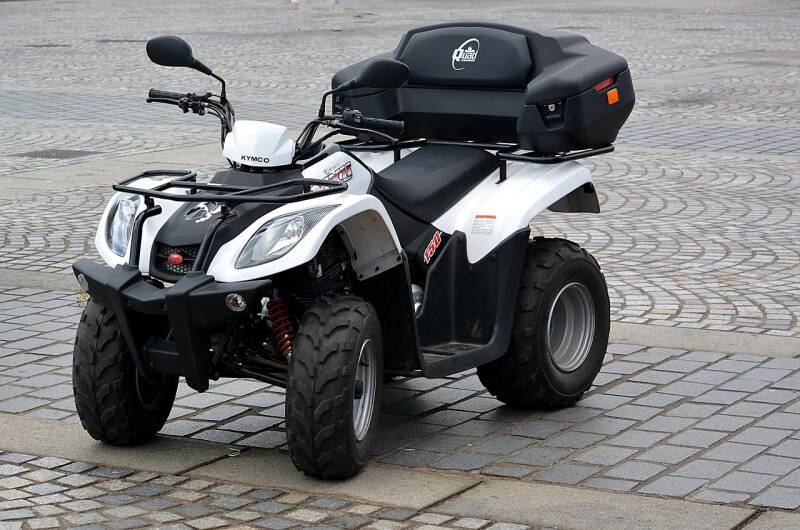
Whether it's a bicycle, scooter, motorbike or quad bike, rental vehicles are a popular way to explore Crete flexibly and are available in many places. The wind in your hair and the feeling of freedom make them particularly attractive, especially away from the big cities.
At the same time, it is worth taking a close look at the reality: many roads are narrow, winding or poorly constructed. Road markings are often missing and potholes or sand in the bends are not uncommon. Added to this is a very unique driving style on the roads. Those who drive defensively, adjust their speed and take protective clothing seriously have a clear advantage. Then the journey remains an experience and not a risk.
Ferries, the gateway to the mainland (and other islands)
Those leaving Crete or arriving from elsewhere usually do so by ferry. These floating hotels connect the island with Piraeus, the Cyclades or other islands, often overnight. The wind blows on deck, the engine roars below, and Greek pop music is guaranteed to be playing somewhere. Depending on the ship, the journey can be comfortable, adventurous or a little chaotic, but always with a view of the sea, the starry sky and the scent of salt air and diesel.
The ferry is Crete's connection to the world, slow, majestic and somehow always a little romantic.
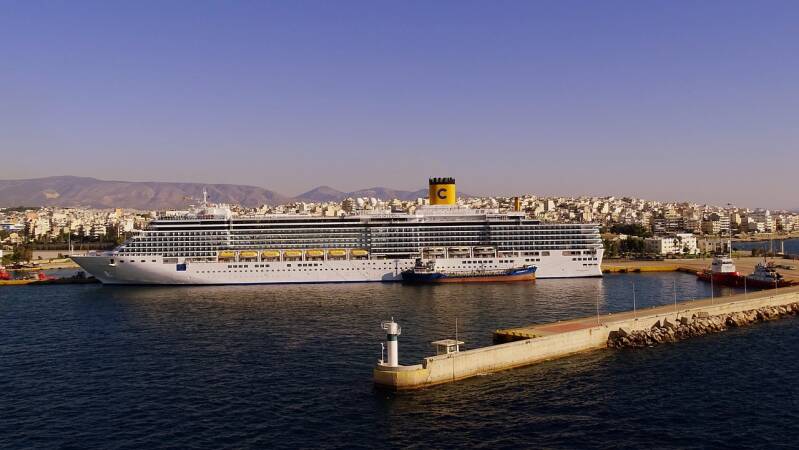

Airplane – the quick jump to (or from) the mainland
If you're in a hurry or simply don't feel like dealing with rough seas, take the plane. Crete has three airports: Heraklion, Chania and Sitia. The flight to Athens takes less than an hour, and before you know it, you're already on your approach.
How to make the best decision
A simple rule of thumb:
- Basic connections between locations: buses
- Direct travel to remote destinations: hire car or taxi
- Short distances within a location: bicycle, scooter, on foot
It is important to consider not only the distance in kilometres, but also the time, effort, price and personal expectations. This applies equally to all modes of transport.
Transport and planning
The choice of transport depends not only on the route, but also on:
- when you are travelling
- how much luggage you have with you
- where your destination for the day is
- how flexible you want to be
For example, if you are planning a hike away from bus routes, you will quickly realise that bus + taxi + walking can be more effort than travelling by car.
Information on how to get there, distances and realistic planning can be found on the following pages:
Conclusion: No means of transport is universal
There is no single ‘best’ mode of transport for all situations in Crete. Each has its merits and limitations.
If you consciously adapt your plans to your mobility options, getting around Crete will not be stressful, but simply part of the experience.